
In this newsletter, we’ll revisit our agile testing principles that we published in our first book, Agile Testing: A Practical Guide for Testers and Agile Teams:
- Provide continuous feedback
- Deliver value to the customer
- Enable face-to-face communication
- Have courage
- Keep it simple
- Practice continuous improvement
- Respond to change
- Self-organize
- Focus on people
- Enjoy
In 2020, we compared and contrasted these agile testing principles with the Modern Testing principles from Alan Page and Brent Jensen in this blog post. In 2022 we wrote a newsletter and looked. back at them through the lens of the virtual work world which become the norm during pandemic. We’ve listed some of the highlights from that newsletter in the next section.
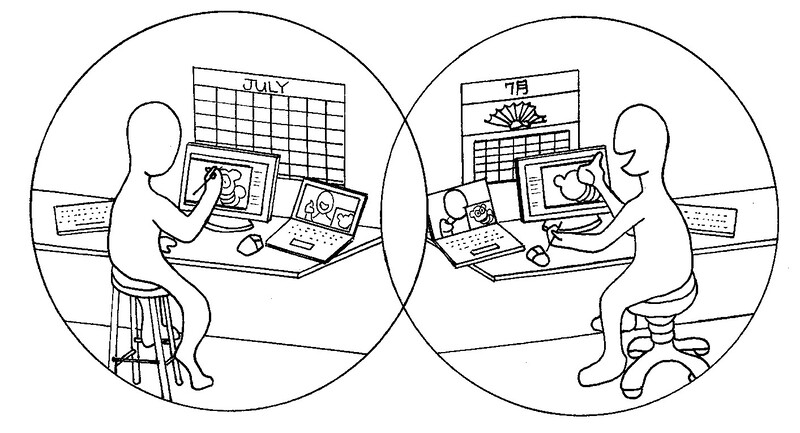
Working remotely
Obviously, Enable face-to-face communication stands out the most! What constitutes face-to-face in a virtual world? Video meetings don’t provide the same quality of communication that we get with in-person conversations, especially when some people don’t use a video camera in virtual meetings. And yet, video calls enable much better communication than threads in chat tools like Slack. No matter how many emoticons or gifs we use while chatting, real-time talking is more likely to result in shared understanding, and less likely to result in unintended offense and misinterpretation.
Providing continuous feedback could be an issue, but Slack and similar tools give some form of feedback from our automated deployment pipelines. When all team members communicate via Slack or a similar communications platform, they are more likely to notice alerts from a failed build. Teams can establish working agreements so that someone on the team immediately investigates that failure and posts their intention to do so in the alerts channel. Slack channels can also be used to communicate production issues, as well as keeping a record of what happened and how a team responded so they can analyze incidents later.
Focusing on people is also a challenge when people are not physically around. Working remotely changes how a team creates a psychologically safe culture. People may be more likely to say something rude or hurtful in a text chat than they would in an office setting. It’s easy to misinterpret text comments and they can come off as insulting or rude.
Working remotely is different from working in-person. We had distributed and fully remote teams even before the pandemic, and many of those were high-performing, happy teams. Keeping these principles front and center can help teams in any environment, and especially those that are struggling with remote ways of working.
Working with AI
When working in a holistic testing approach, all team members know how they contribute to the quality of their product. The rapid evolution and adoption of AI-assisted development and testing have led to serious concerns about the quality of software produced today. Does this change how the principles correlate with successful modern software development, including testing activities?
Experience and research show that AI is an amplifier. Teams that were already proactive about building quality in, use AI tools to save time with coding and other development activities. They spend that time and energy collaborating with stakeholders to better understand customer needs and build the right software capabilities. Poorly performing teams that don't spend time understanding the risks and value to customers before writing code, and leave testing to the last minute, get into more trouble. They generate more code faster, and experience even more production issues and customer pain.
We believe the agile testing principles continue to provide guidance to software teams - not only the testers - that want to deliver value to customers frequently, at a sustainable pace.