Some lucky testing & quality professionals have had the opportunity to be part of an effective cross-functional team that grows into a high-performing team. It’s hard to understand the “magic” of a team like this if you’ve never experienced it. There are many reasons so many so-called cross-functional teams never experience this magic.
We often see that Scrum, Kanban or other cross-functional teams are really just a tiny organization with mini-silos and mini-waterfalls. Analysts still hand off requirements to be executed, coders still hand off code to be tested, testers still hand off deliverables to be released to production. Each role or job title is strictly defined; each individual follows a narrowly defined path for career progression. Team members in this setting have little motivation to branch outside their job description. Someone who is paid to write lines of code will feel they cannot spend time on testing activities.
Working towards the magic
Having both worked on, observed many high-performing cross-functional teams, we believe the key to success lies in embracing the concept of valuing competencies over roles. Someone with deep exploratory testing skills may also have some excellent business analysis skills. A talented designer might also excel at exploratory testing. A coder and a tester can collaborate on automating acceptance tests to guide development, combining their coding and test design skills. We do need specialists with deep skills on our teams – no one person can know everything about everything. Yet, each specialist can have a broad range of competencies to bring to the party.
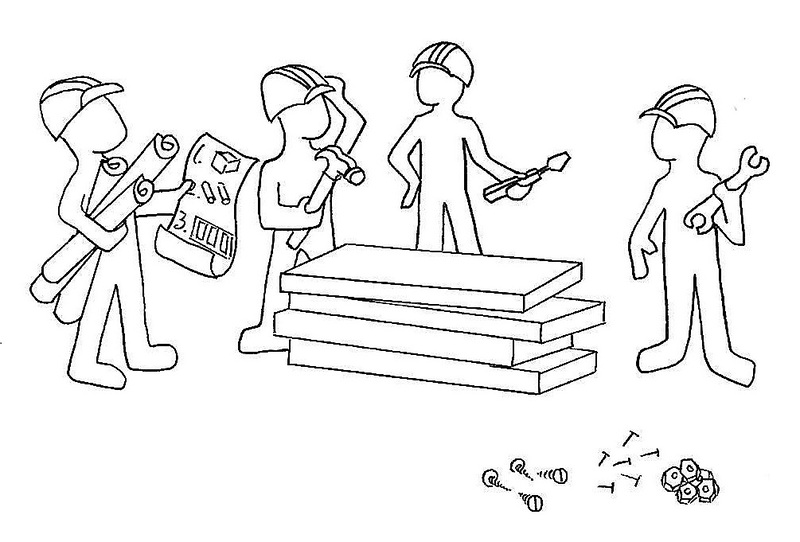
We can all wear a lot of hats, and we don’t want to be limited or “pigeon-holed” with a particular job title. Visionary leaders find ways to encourage each team member to contribute multiple skills. When each person on the team feels equally valued, they can collaborate to find creative ways to improve quality of their product and process. Here are a couple of tips from our experience that let people add to their range of skills in a way that benefits everyone.
Expand non-testers’ skills matrices
A few years ago, Lisa’s team realized they needed more exploratory testing to counteract a steep rise in production issues. Only two people in the team of 30 had an official role of “tester”. The team agreed that programmers would do exploratory testing on the stories they developed. The whole team took responsibility for exploring at the feature or epic level, before flipping the feature flag “on” for all users in production.
The testers facilitated exploratory testing workshops and ensemble testing sessions so the non-tester team members could ramp up their skills. Testers and programmers started pairing frequently, to work on stories, write exploratory testing charters, and do exploratory testing. Perhaps most importantly, the managers added exploratory testing skills to each level of the programmers’ career ladder. They were motivated and empowered to add a new range of competencies to their toolbox.
Testers act as consultants
We recommend that cross-functional teams adopt a whole team approach to testing and building quality in. Agile and DevOps teams often include only one or two professional testers. As testers on these teams, we can be more effective by acting as testing consultants and quality advocates.
As mentioned above, we testing specialists can help team members learn a wide range of testing skills through pairing, ensemble work, workshops, and other activities. We can encourage and facilitate team retrospectives to identify the biggest obstacle to improving product or process quality and help design experiments to overcome that obstacle. We can observe and ask good questions. And, we can add to our own skill sets through collaborating with coworkers with other specialties. Of course, like any tester who loves their job, we like to do some hands-on testing as well.
If you feel a particular job title will help others understand your value, work with your manager to change it. Whatever your job title is, help your entire team gain testing competencies. See how you can add more value with skills that go beyond testing. Your contributions working together with the team may go far beyond your official role.